BodyViz Anatomy Table vs. Anatomage Table: Which Virtual Dissection Platform Delivers Greater Value for Your Institution?
March 19, 2026
.jpg "BodyViz Anatomy Table vs. Anatomage Table: Which is Right for Your institution?")
As virtual dissection technology becomes increasingly central to modern anatomy education, institutions must carefully evaluate which platform best aligns with their academic goals, budget structure, and long-term strategy.
Two leading solutions in this space — the BodyViz Anatomy Table and the Anatomage Table — both offer immersive 3D anatomy visualization. However, their approach differs in clinical integration, cost structure, hardware flexibility, and scalability.
This article breaks down the key distinctions to help educators, department heads, and teams make an informed investment when determining which virtual dissection table is the right fit.
Real Patient Data vs. Reconstructed Cadaver Models
Both platforms use real human anatomy data, but they differ in how that data is sourced and applied.
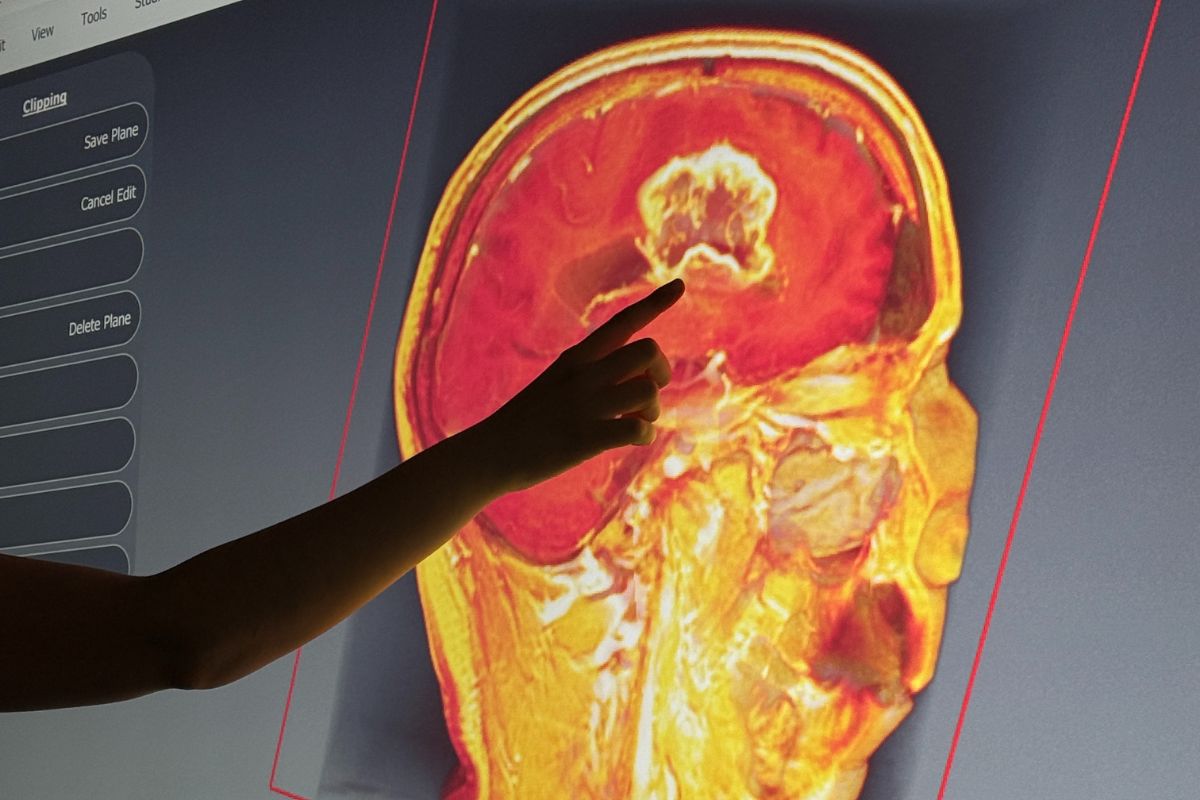
The BodyViz Anatomy Table uses real MRI and CT patient scans, which is the same imaging that data clinicians use daily in hospitals. Students interact with over 1,000 real scans, developing the ability to read and interpret clinical imaging from day one. This exposure directly prepares students for clinical rotations because they will encounter MRI and CT data as their primary diagnostic tool once in the field.
The Anatomage Table’s digital bodies are derived from frozen cadaveric slices that are reconstructed into highly detailed 3D models. Anatomage also incorporates selected real-patient case studies. However, its primary anatomical framework centers on reconstructed cadaver models rather than live clinical scan libraries.
For institutions prioritizing clinical imaging readiness, this distinction plays an important role in curriculum planning.
Total Cost of Ownership: A Decisive Advantage
Cost structure is often a big decision factor in institutional procurement.
The Anatomage Table is generally priced around $90,000. Beyond the initial purchase, Anatomage requires recurring license fees to maintain access to software updates and educational content. The system runs on proprietary hardware, meaning institutions are locked into Anatomage's ecosystem for repairs, upgrades, and replacements.
The BodyViz Anatomy Table is priced at approximately half that amount. It includes a BodyViz Touch Perpetual License, eliminating recurring subscription or renewal fees. Access to the BodyViz Portal, instructional activities, and the included MRI and CT scan library is bundled into the purchase.
The hardware itself is Windows-based and built on standard, non-proprietary components. This means IT departments can service the equipment using standard parts and protocols rather than depending on a single vendor for support. It also means that the BodyViz table can be used across various classrooms, not limiting to purely anatomy. Over time, this open hardware model may reduce long-term maintenance costs and vendor dependency.
For institutions managing multi-year budgets, these structural differences can significantly affect total investment over the lifespan of the equipment.
Scalability Across Campus
The Anatomage Table functions as a standalone virtual dissection unit, primarily serving anatomy-focused coursework.
The BodyViz Anatomy Table is designed for broader institutional integration. Built on a Windows platform, it supports additional instructional applications beyond anatomy. This allows other departments to leverage the hardware for presentations, instruction, and supplemental coursework.
This flexibility may be particularly valuable for large programs, shared lab spaces, and multi-campus institutions seeking maximum utilization from a single investment.
Classroom Versatility and Mobility
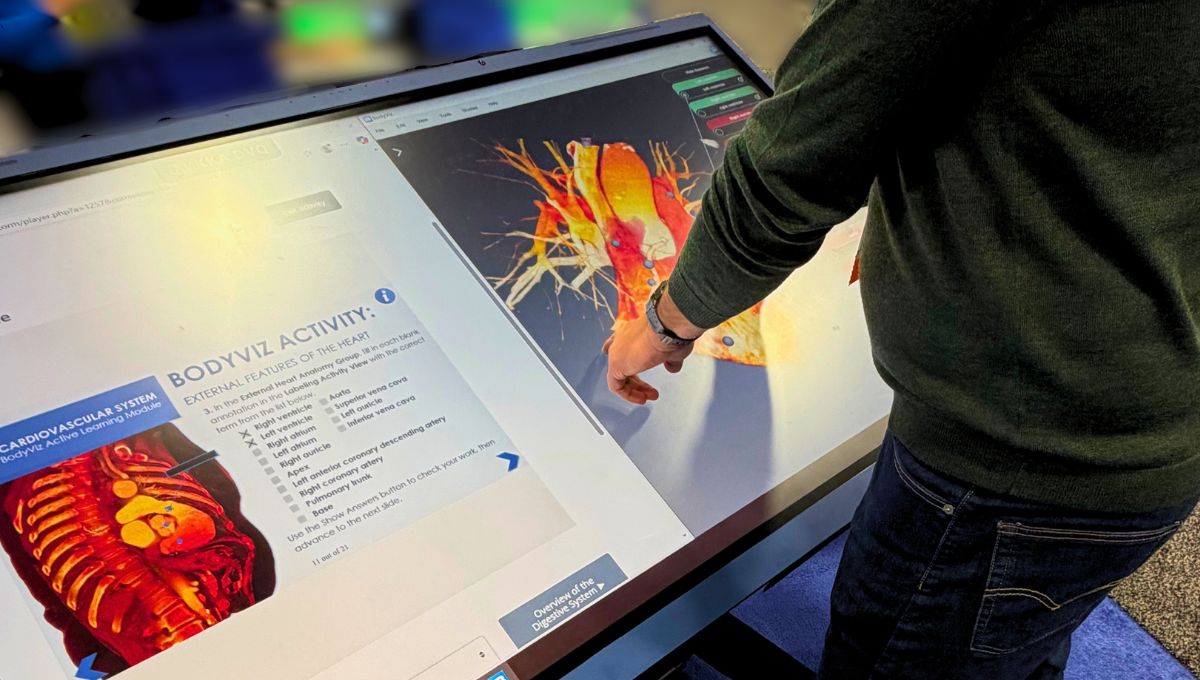
The BodyViz Anatomy Table features a 65-inch display that transitions from a vertical presentation screen to a fully horizontal dissection surface. This dual functionality allows the table to serve as both a teaching display and a virtual dissection station.
The motorized height-adjustable stand includes 26 inches of vertical travel, controlled by a battery-free remote. The adjustable height accommodates users in wheelchairs, meeting accessibility requirements that many institutions prioritize. It has four non-marking caster wheels that allow the table to move easily between classrooms, departments, and even buildings.
The Anatomage Table features a larger 84-inch display, offering an expansive visual experience. However, its larger size and weight can limit mobility and placement flexibility, particularly in smaller classroom environments.
Institutions prioritizing mobility and multi-room usage may find this distinction significant.
Split-Screen Teaching and Annotation Tools
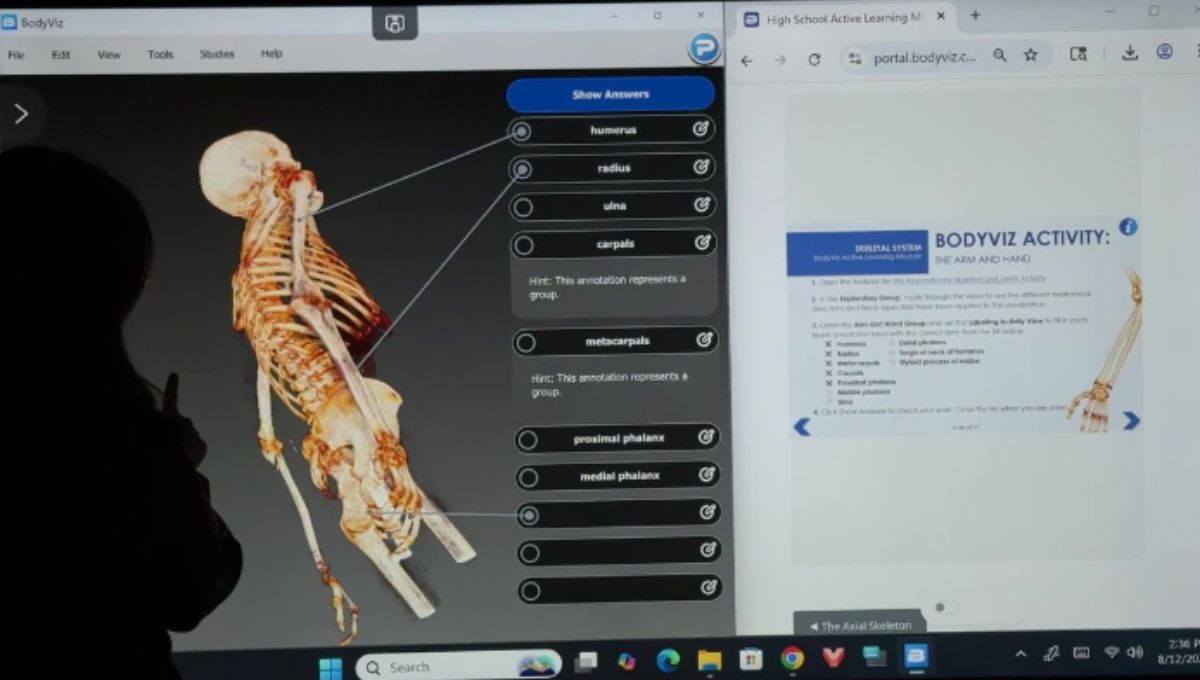
The BodyViz Anatomy Table includes split-screen functionality, allowing instructors to display lesson materials alongside live 3D dissection. Because it operates within a Windows environment, educators can run PowerPoint, PDFs, videos, and additional software directly alongside the BodyViz platform.
Two included smart pens allow instructors and students to annotate directly on scans, draw attention to structures, and write notes without stepping away from the table. This turns the table into a digital whiteboard and dissection station simultaneously.
Anatomage includes lecture tools such as screen recording and note-taking. However, its proprietary operating system can limit integration with third-party applications compared to an open Windows-based system.
For instructors who rely heavily on external teaching materials, platform flexibility may influence workflow efficiency.
Human and Veterinary Anatomy
BodyViz includes both human and veterinary 3D anatomy scans and modules. Students can explore anatomy across species including cats, dogs, birds, and reptiles. This supports institutions offering both human health and animal science programs.
Anatomage primarily focuses on human anatomy models, including male, female, geriatric, and pregnant cadaver models, along with histology and physiological simulations.
Institutions with veterinary or cross-species instructional needs may find broader curriculum alignment with BodyViz.
Perpetual License vs. Recurring Fees
The BodyViz Anatomy Table includes a perpetual license, meaning there’s no annual fees. Along with this, full access to the BodyViz Portal is also included after purchase. This means that users will be able to access all Portal learning content, interactive activities, and updates for all one price, with no surprises.
The Anatomage Table operates on a recurring license structure for continued access to software updates and educational content. These annual costs should be considered within long-term operational budgeting.
Over multiple years, licensing models can materially affect total ownership cost.
The Bottom Line
Both the BodyViz Anatomy Table and the Anatomage Table represent significant advancements beyond traditional cadaver-based instruction. The Anatomage Table offers a large screen, detailed reconstructed cadaver models, and physiological simulations that have established its presence in anatomy education.
For institutions evaluating total cost of ownership, scalability, classroom versatility, clinical readiness, accessibility, and long-term flexibility, the BodyViz Anatomy Table presents as a strong Anatomage alternative.
BodyViz gives students real clinical imaging experience from day one. By combining real MRI and CT imaging, open hardware architecture, a perpetual license model, and cross-departmental usability, BodyViz supports institutions seeking both instructional impact and long-term financial sustainability.
Ready to see the difference for yourself?
Schedule a demo of the BodyViz Anatomy Table and discover how real patient imaging, one-click dissection, and campus-wide scalability can transform your anatomy program.